Mastering the Basics: Sketching Techniques That Build Confidence

Welcome to a friendly deep dive into the foundations that make every sketch feel alive and intentional. Today’s chosen theme: Basic Sketching Techniques—your launchpad for clearer lines, stronger shapes, and expressive drawings.

Start with Lines and Shapes

Spend five minutes drawing straight lines, arcs, and ellipses from the shoulder, not only the wrist. Ghost the motion above the page, then commit. This builds control, rhythm, and confidence before real sketching begins.

See Like an Artist: Proportion and Negative Space

Hold your pencil at arm’s length to compare heights and widths. Use a plumb line to check alignment of features. Angle your pencil to capture tilts accurately, then transfer those observations directly onto the page.

Light and Shadow: Shading Fundamentals

Create a nine-step value scale from white to deep black. Practice hard, soft, and lost edges. Edges tell viewers where to focus, guiding attention through your sketch more reliably than outlines alone.

Light and Shadow: Shading Fundamentals

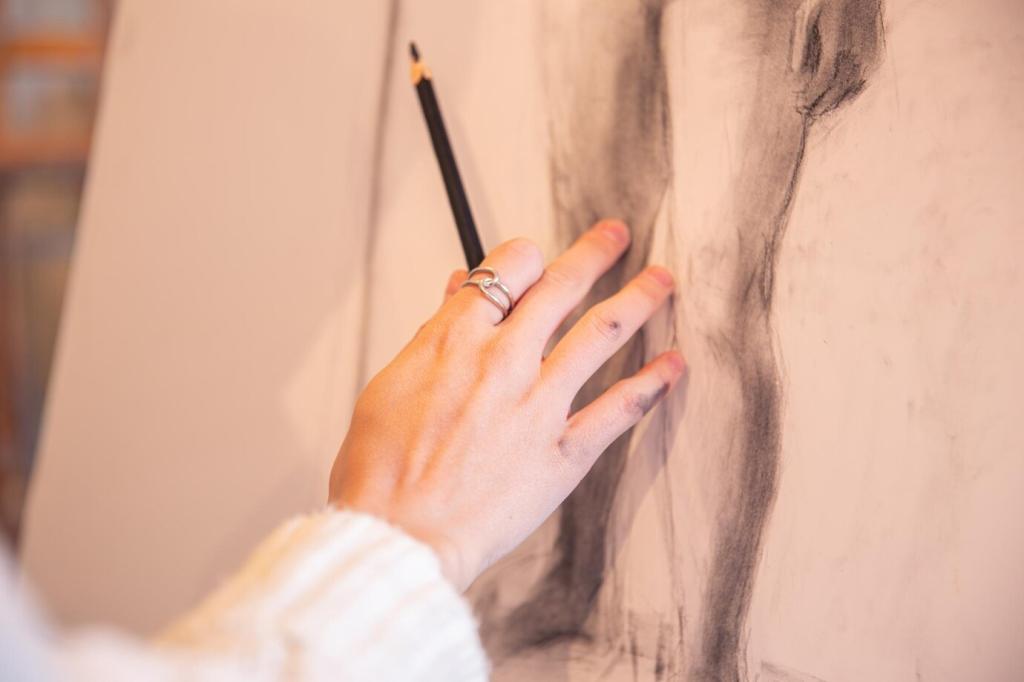
Curve your hatches around the object to reveal volume. Add cross-hatching sparingly for darker passages. Keep stroke direction consistent within areas, and let spacing, not pressure alone, control value transitions cleanly.

Perspective Without Panic

Draw a room corner using two-point perspective. Mark the horizon at eye level, place vanishing points, then build simple boxes. Add windows and shelves. These drills strengthen spatial thinking faster than theory alone.

Perspective Without Panic

Practice ellipses at different degrees and ensure their minor axes align to the perspective. Sketch cups, wheels, and bowls. Consistent, aligned ellipses immediately make everyday objects feel more solid and convincing.
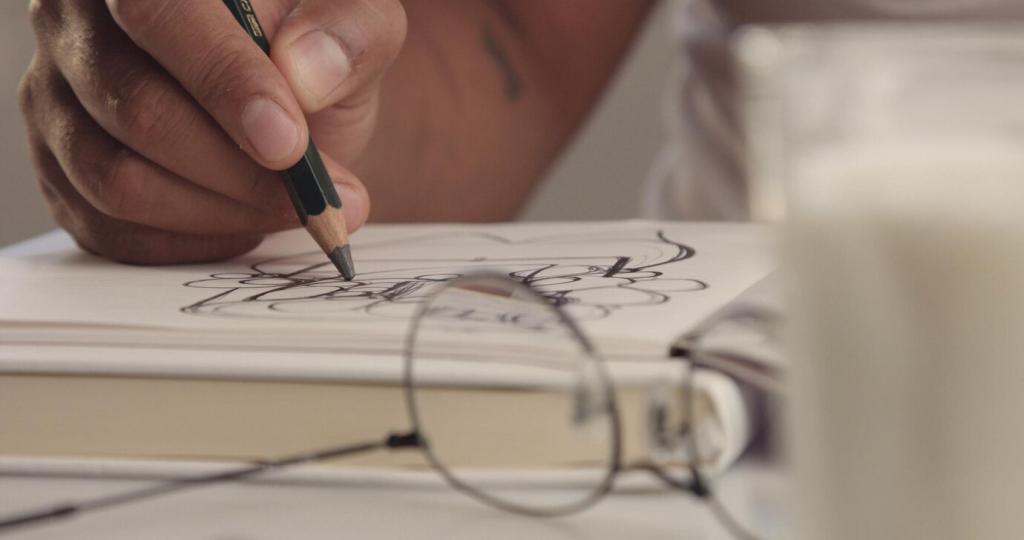
Thirty-Second Gestures

Set a timer and sketch people from life or reference in thirty seconds. Focus on the line of action and major masses. Speed forces clarity, preventing overworked outlines and teaching economy in every stroke.

Story in a Single Line of Action

Start with a sweeping spine line showing movement. Add simple shapes for ribcage and pelvis. Even with stick figures, you will communicate mood and direction, then layer structure and details only where needed.

A Small Bus-Stop Anecdote

I once sketched commuters in drizzle, capturing hunched shoulders and umbrella angles with three lines each. Those quick gestures held more truth than longer studies. Try it today and share your favorite gesture moment.

Composition and Page Design

01
Fill a page with tiny rectangles. Explore rule of thirds, big medium small groupings, and dynamic diagonals. Decide value masses early. Thumbnails prevent aimless erasing and make every full-size sketch more intentional.
02
Reserve your darkest darks and sharpest edges for the focal area. Let surrounding zones soften and lighten. This simple prioritization directs the eye and keeps supportive details from shouting over your main subject.
03
Leave generous margins and breathing room. Suggest, don’t spell everything out. A confident unfinished area often feels more alive than a crowded page. Invite viewers to complete the story with their imagination.

Tools, Habits, and a Sketchbook Mindset

Pack an HB and 2B pencil, a kneaded eraser, a compact sharpener, and a smooth sketchbook. Add a fineliner for accents. Simplicity removes excuses and makes daily practice frictionless wherever you are.

Tools, Habits, and a Sketchbook Mindset

Start sessions with two minutes of lines, two minutes of shapes, and one minute of ellipses. Track streaks, not quality. Consistency compounds skill. Subscribe for weekly prompts that keep your momentum steady.
Growingatgrove
Privacy Overview

This website uses cookies so that we can provide you with the best user experience possible. Cookie information is stored in your browser and performs functions such as recognising you when you return to our website and helping our team to understand which sections of the website you find most interesting and useful.